Protein A chromatography is the industry standard capture step for antibody purification, providing high selectivity and scalability. However, the acidic conditions required for antibody elution create an inherent challenge, as low pH can destabilize antibodies and promote aggregation.
In this study, the impact of elution pH and buffer chemistry on antibody aggregation and elution behavior was investigated during purification of an aggregation-prone monoclonal antibody (Antibody X). Different elution conditions were evaluated using the protein A resin WorkBeads™ affimAb Edge, and aggregation levels were analyzed by size exclusion chromatography.
The results demonstrated that aggregation increased at lower pH, while the choice of buffer system significantly influenced the elution profile. Citrate buffers enabled a more uniform pH transition and produced narrower elution peaks compared with glycine-HCl. Among the tested conditions, citrate at pH 3.5 provided the best balance between efficient elution, peak shape, and controlled aggregation. Under these optimized conditions, WorkBeads™ affimAb Edge delivered higher yield and lower aggregate levels compared with widely used commercial protein A resins, demonstrating its suitability for efficient purification of aggregation-prone monoclonal antibodies.
Challenges in Antibody Purifications
Monoclonal antibodies (mAbs), including bispecific formats, and Fc-containing antibody derivatives are important components in many diverse therapies due to their ability to specifically target selected antigens. This specificity also makes mAbs, and derivatives thereof, vital tools in the development of diagnostic kits as well as biomolecular assays for analyte detection. However, to achieve the required selectivity, therapeutic mAbs are subjected to stringent purity requirements, increasing the demand for efficient and economical purification processes. In such a purification regime, protein A resin is considered the gold standard for efficient capture. It is usually the single largest contributor to cost of goods while also being especially receptive to fouling and capacity decay. This makes it a key target for process optimization.
Recent advancements in upstream processing have improved the efficiency of mAb production, which further drives the need for more efficient downstream purification, both in terms of resin capacity and impurity clearance. The main critical impurity challenges include host cell nucleic acids, such as host cell DNA and RNA, host cell proteins, viruses, and mAb aggregates, all of which can cause severe allergenic reactions in treated patients and therefore must be removed. Among these, mAb aggregates are of particular concern, as increased production yields typically lead to higher target concentrations and a greater risk of nucleation. This issue is further accentuated by the increased binding capacities of modern protein A resins, which result in even higher localized concentrations at the binding surface. When combined with the acidic conditions required for elution, which are known to enhance aggregation, the issue is of clear concern.
In addition to the high purity demands, more stringent sustainability requirements force process optimizations to decrease both buffer and resin consumption at the same time as processes need to be both faster and more cost-efficient.
Taken together, these factors mean that modern purification processes require high-performing protein A resins that are robust and flexible, enabling operation at high flow rates and high loading capacities without compromising product quality.
WorkBeads™ affimAb Edge
WorkBeads™ affimAb Edge is a next-generation resin in the affimAb series, engineered for efficient purification of monoclonal antibodies and any Fc-containing fragment or fusion product from laboratory to process scale. The resins are designed to provide optimal purification performance with a dynamic binding capacity (DBC) at >60 mg/mL at 4 min and >70 mg/mL at 6 min residence time.
The improved resin is constructed from a novel agarose-based matrix resulting in porous beads with a tight pore size distribution and very high mechanical stability. In combination with the optimized density of the immobilized alkali-stable protein A ligand, WorkBeads affimAb Edge allows high DBC together with superior pressure flow characteristics. Together this results in faster processing, reduced elution volumes, and robust performance across multiple purification cycles.
With its cost-effective design WorkBeads affimAb Edge provides high loading rates, target recovery and purity resulting in greater process efficiency and improved overall economics for antibody purification workflows.
Platform for mAb purification
Protein A chromatography is the established standard capture step in antibody purification due to its high selectivity, robustness, and scalability. On its own, this step commonly produces antibodies with purities above 95%.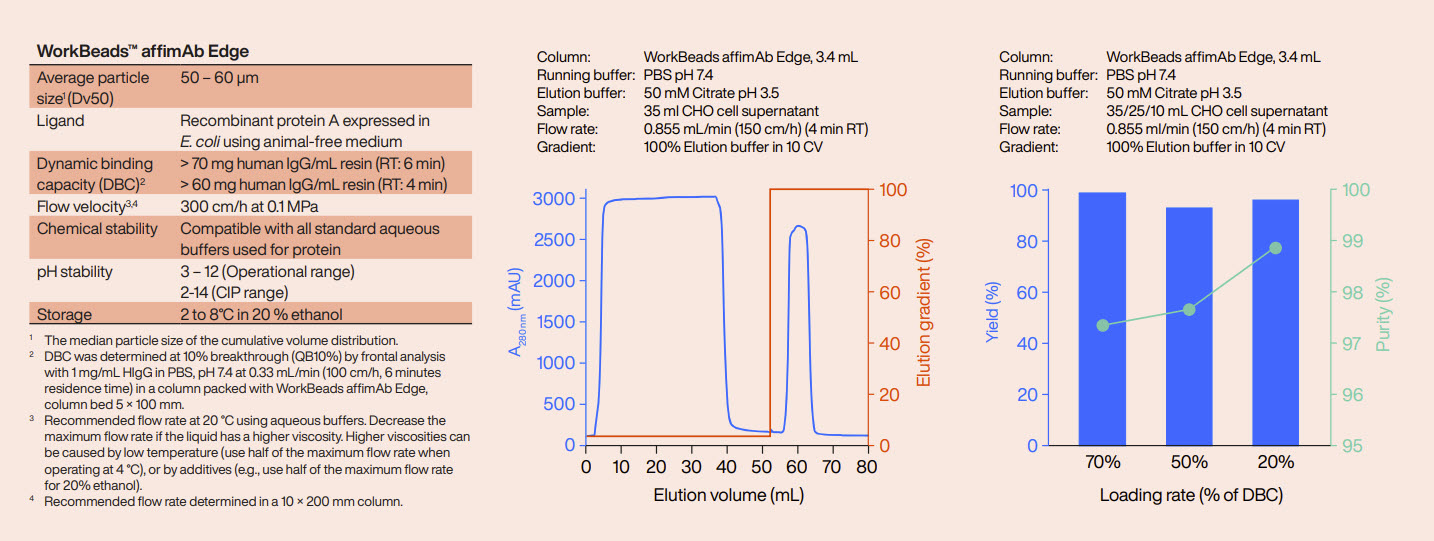
The capture step is typically followed by one or two polishing steps to remove impurities and aggregates to meet final product purity requirements. In a traditional three-step purification the first polishing step involves an anion exchanger (AIEX) for removal of host cell DNA (HCD), viruses, and certain host cell proteins (HCP). Aggregates and remaining HCP are subsequently removed using cation exchange (CIEX) as the second and final polishing step.
For mAbs that are particular challenging to purify it can be beneficial to enhance the feed by introducing a guard column upstream to the protein A column, for example WorkBeads 40 TREN operated in flow through mode. The guard column significantly reduces the impurity load entering the protein A column, which not only improves feed quality but also extends the lifetime and productivity of the protein A resin. The enhanced three-step purification approach is explored further in the application notes: Protection of protein A resins during mAb purifications and Platform for mAb purifications from Bio-Works.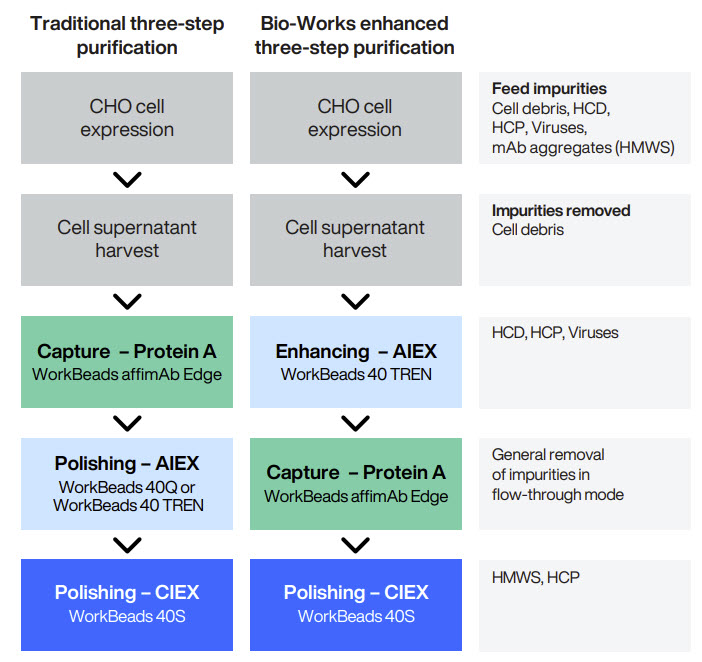
The Elution Dilemma
Aggregate formation is an inherent challenge in protein A chromatography, since elution requires a shift to low pH, typically pH 2.7–3.5. Under these low-pH conditions protein A undergoes conformational changes that weaken its interaction with the Fc region of the antibody, thereby enabling elution. However, this creates an “elution dilemma”: while sufficiently acidic conditions are required to efficiently release the antibody from the resin, exposure to low pH may compromise antibody stability and promote aggregation.
When pH drops below 4.0, key stabilizing interactions – including hydrogen bonds and salt bridges that maintain the structural integrity of the antibody – are disrupted. As a result, intramolecular and interdomain interactions are weakened, leading to increased conformational flexibility and partial unfolding. This destabilization exposes hydrophobic regions and promotes non-native intermolecular interactions that may initiate nucleation and subsequently lead to aggregation.
Moreover, the high protein concentrations encountered during low-pH protein A elution favor interactions that promote aggregate formation. This is due to the direct relationship between antibody concentration and the probability of hydrophobic intermolecular contacts. Although acidic elution is necessary in protein A chromatography, it represents a high-risk processing step that can induce aggregation if not carefully controlled. For therapeutic antibodies, this is particularly critical, as aggregation may reduce biological activity and trigger severe immunogenic responses in patients if not adequately removed.
To investigate how aggregation develops – and whether it can be minimized – different elution conditions were evaluated during purification of a monoclonal antibody with a particularly high tendency to aggregate. From here on, referred to as Antibody X (Table 1, Figure 1).
All experiments were conducted on the high-performing protein A resin WorkBeads affimAb Edge at standard operational conditions with a loading rate of 70% of DBC. The sample source of Antibody X was a clarified CHO cell supernatant with an antibody concentration of approximately 5 mg/mL. The presence of aggregates in the elute was analyzed fraction-wise by analytical size exclusion chromatography (SEC) (Superdex 200 10/300 Increase, Cytiva) and evaluated as a percentage of higher molecular weight species (HMWS).
Table 1. Biochemical characteristics of the monoclonal antibody used in this application, Antibody X.
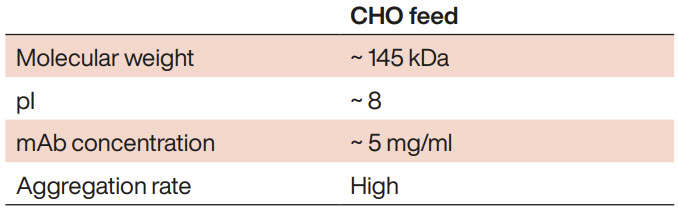
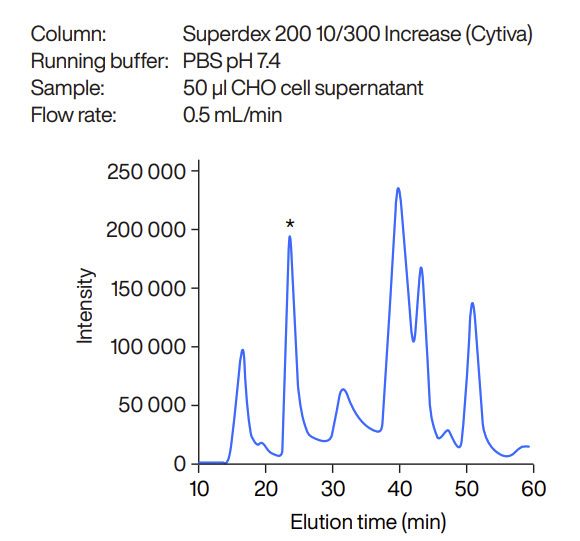
Figure 1. Analytical SEC profile of the CHO cell supernatant used in the study. The asterisk (*) highlights the target mAb.
Effect of Elution pH
Initially the behavior of Antibody X was tested in a span of elution conditions ranging from pH 2.7 to 4.0. The expected aggregation trend is observed in Figure 2 where the most acidic elution buffer (pH 2.7) triggers the highest level of higher molecular weight species (HMWS) while increased pH results in lower levels of HMWS.
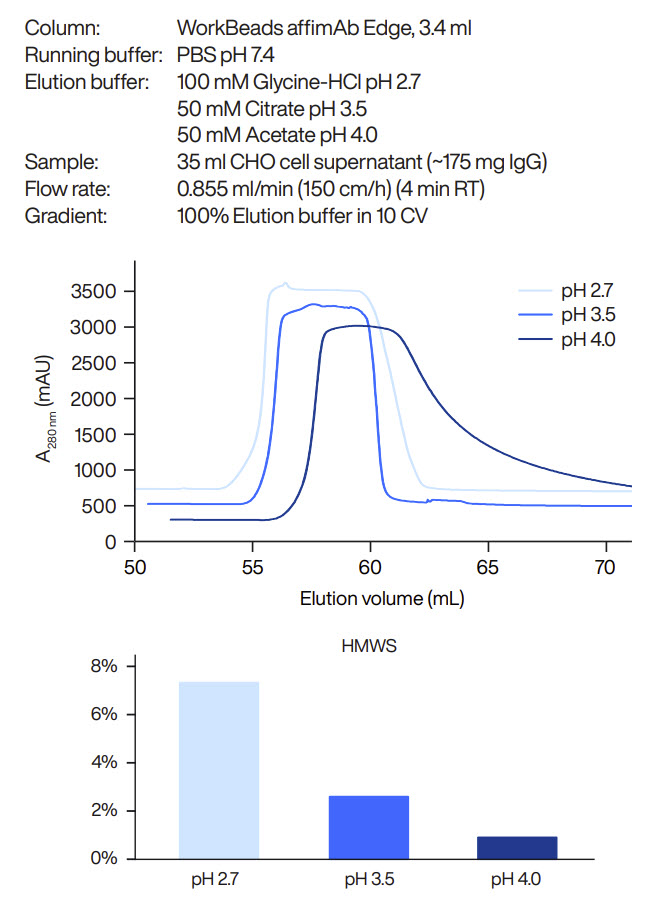
Figure 2. pH dependence of mAb elution and HMWS levels from the corresponding elutions. At pH 2.7, 3.5, and 4.0.
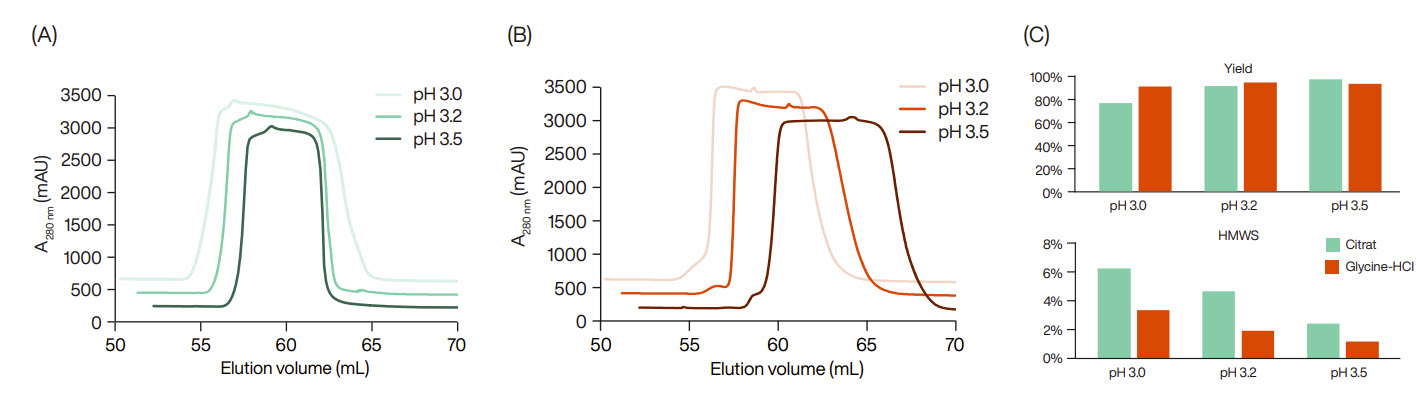
Figure 3. Buffer and pH dependence of mAb elution using (A) citrate buffer and (B) glycine-HCl at pH 3.0, 3.2, and 3.5. (C) Yield and HMWS levels from the corresponding elutions.
One of the main descriptors of an efficient elution is peak width. A narrow elution peak is advantageous because it reduces the volume that must be handled in subsequent downstream purification steps, thereby saving time and resources. Theoretically, a lower pH would be expected to result in stronger elution and, consequently, a narrower peak shape. Consistent with this expectation, the highest tested pH (pH 4.0) produced a broad and tailing elution peak, likely due to incomplete disruption of the antibody-protein A interaction under insufficiently acidic conditions.
However, the elution peak shapes at pH 3.5 and 2.7 do not follow the expected trend, as elution at pH 3.5 results in a narrower peak shape than at pH 2.7. These findings suggest that pH 3.5 represents the preferable elution condition since it produces both the narrowest elution peak and lower levels of HMWS. This observation raises the question of why pH 3.5 in this example yields a narrower peak shape than pH 2.7.
Mechanistic Insight
To better understand the parameters affecting peak shape, aggregation levels, and yield, an additional set of elution buffers was investigated during purification of Antibody X. Two different buffer systems, citrate and glycine-HCl, were evaluated at pH 3.0, 3.2, and 3.5, respectively (Figure 3).
Interestingly, the peak shapes follow opposite trends in the two buffer systems indicating that the buffer chemistry
might influence the elution performance and peak shape. For citrate elution, the peak shape becomes narrower as pH increases, whereas for glycine-HCl elution the peak broadens with increasing pH (Figure 3A).
The HMWS levels followed the expected trend and resulted in lower levels with increasing pH. Noteworthy is that citrate buffer consistently produced slightly higher total HMWS levels compared to glycine-HCl buffer. This could potentially be an effect of total elution volumes and consequently different mAb concentrations in the eluted pools (Figure 3B).
This opposite peak-shape behavior likely arises from different underlying mechanisms. For citrate elutions, peak broadening correlates with higher HMWS levels. Fraction-wise analysis of the elution peak (Figure 4) shows accumulation of HMWS toward the trailing edge of the peak. A possible explanation for the peak broadening observed at lower pH is that higher aggregate levels promote accumulation in the later elution fractions, broadening the peak as larger complexes migrate more slowly due to steric hindrance and stronger interactions.
The reverse peak shape behavior, observed for glycine-HCl elutions, is explained by the buffer properties of glycine-HCl. Since the pH decrease is the main driving force to disrupt interaction between protein A and the captured antibody, alterations in the pH transition will influence elution efficiency. When elution buffer is applied to the protein A column, a shift in both pH and conductivity
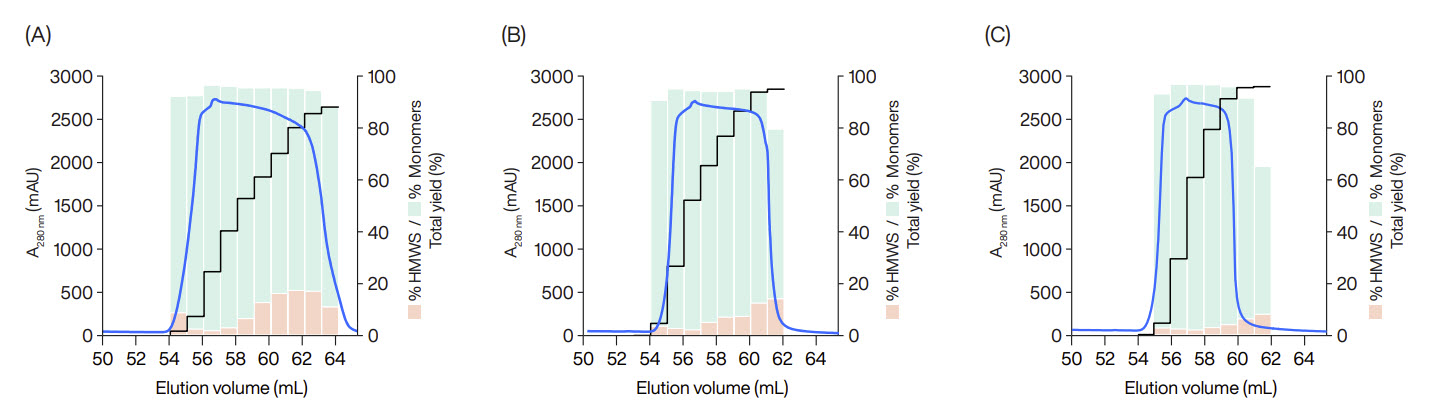
Figure 4. Fraction-wise analysis of mAb elution using citrate buffer at pH (A) 3.0, (B) 3.2, and (C) 3.5. The blue line represents the UV signal, the red and green bars represent the level of HMWS and monomers, respectively and the black line represents the total yield.
will be observed after the break-through at 0.9 column volumes as the elution buffer migrates through the column. Monitoring pH and conductivity during elution reveals clear differences in how citrate and glycine–HCl buffers propagate through the column.
For citrate, the observed pH transition closely follows the conductivity shift early in the elution peak, as exemplified by citrate at pH 3.5 in Figure 4A. This indicates that the buffer front propagates through the column in a relatively uniform manner, resulting in a predictable pH decrease that efficiently disrupts the antibody–protein A interaction and enables elution.
In contrast, when elution is performed with glycine-HCl, both the pH and conductivity transitions behave differently (Figure 5). After elution buffer break-through, the pH exhibits an overshoot rather than an immediate decrease, causing a delay before the pH drops sufficiently to complete elution. Meanwhile, the conductivity initially decreases and then gradually increases as the pH approaches the target value.
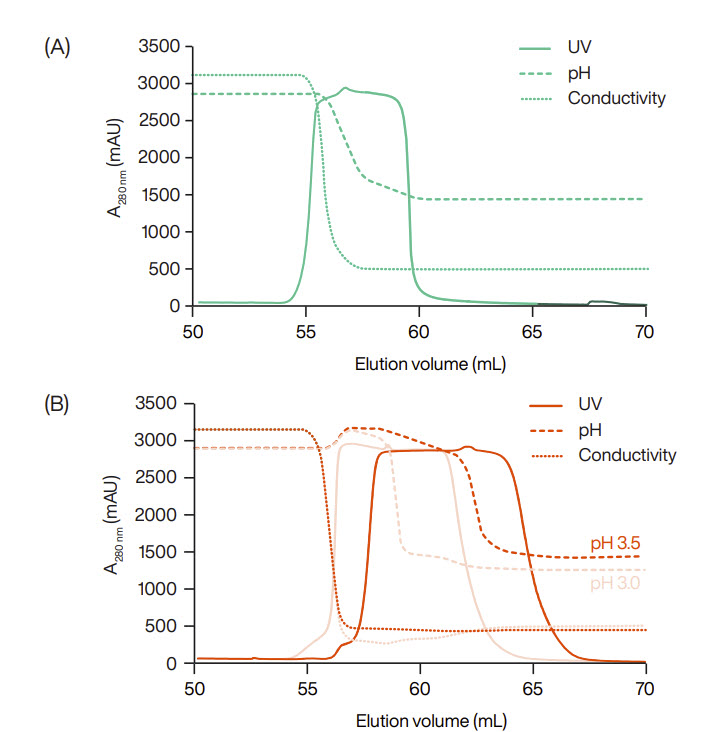
Figure 5. Buffer and pH dependence of mAb elution using (A) citrate buffer at pH 3.5 and (B) glycine-HCl at pH 3.0 (light red) and 3.5 (red). Monitoring UV (solid line), pH (dashed line), and conductivity (dotted line).
This rise is a consequence of the properties of glycine. At the pH values observed during the overshoot (>7.4), glycine is predominantly present in its zwitterionic form and therefore contributes minimally to the overall conductivity. As the pH stabilizes to the target value (3.0 or 3.5), glycine becomes protonated, resulting in a slight increase in conductivity. This effect is more pronounced at lower pH.
The pH overshoot is likely caused by ion-exchange interactions between glycine cations and sodium ions associated with negatively charged residues on the protein A ligand.1 These interactions delay the propagation of the pH front through the column. The relatively low buffering capacity of glycine-HCl at these pH values may further contribute to the delayed establishment of the target pH. This delayed pH transition leads to a postponed antibody desorption and a broadened elution peak. At higher pH, the buffering capacity decreases further, prolonging the overshoot and causing additional delay and peak broadening. Consequently, a clear difference is observed between the elution profiles at pH 3.0 and pH 3.5 in Figure 4B.
Based on these results, citrate at pH 3.5 was selected as the preferred elution buffer for Antibody X as it results in a narrow elution peak, high yield, and moderate HMWS levels that can be removed in later stages of the purification process.
Performance Comparison of Protein A Resins
The preferred elution condition, citrate at pH 3.5 was further evaluated to assess the performance across different protein A resins. Antibody X was purified using WorkBeads affimAb Edge and two widely used commercial protein A resins, MabSelect™ PrismA and SuRe 70.
This comparative evaluation showed that elution peak shapes were comparable among the three tested resins. The capture eluates were further analyzed for aggregate content, yield and purity.
The SEC chromatograms (Figure 5A) of the eluates show a dominant monomer peak for all samples, indicating efficient capture and recovery of the target antibody. Among the evaluated resins, WorkBeads affimAb Edge produced the lowest levels of high molecular weight species (HMWS) (Figure 5B), demonstrating improved control of aggregation during the capture step. All evaluated resins also demonstrated high yield (>90%) (Figure 5C) and high purity (Figure 5D). Notably, WorkBeads affimAb Edge achieved a yield above 95% and produced the purest eluate among the tested resins.
Taken together, all three evaluated resins are high-performing and result in comparable elution peak shapes. However, further analysis of the eluates showed that WorkBeads affimAb Edge delivered higher yields, higher purity, and lower levels of HMWS, highlighting its potential to enhance both productivity and product quality in antibody purification processes.
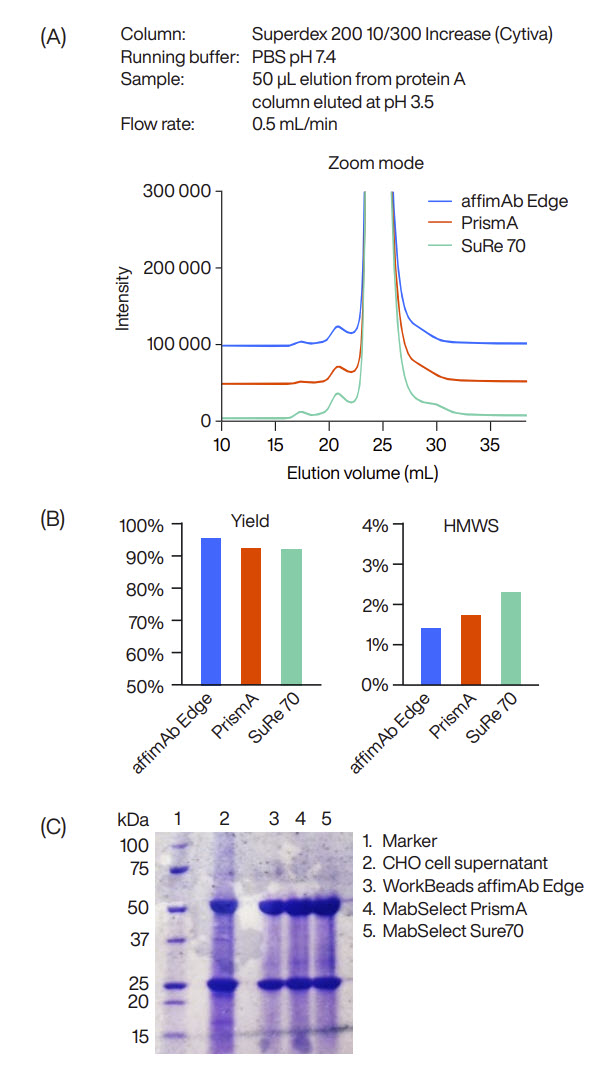
Figure 6. Comparative evaluation of WorkBeads affimAb Edge (blue), MabSelect PrismA (red), and MabSelect SuRe 70 (green) during purification of Antibody X using citrate pH 3.5 as the elution buffer. (A) analytical SEC profile, (B) yield and HMWS analysis, and (C) SDS-PAGE of eluted mAb pool.
Conclusions
The choice of elution buffer and pH strongly affects performance in protein A chromatography, as both parameters play a critical role in controlling aggregation and peak shape. A central challenge is the “elution dilemma”, where the low pH required to release the antibody from the protein A ligand simultaneously promotes antibody aggregation. In this study, the effects of elution pH and buffer chemistry were evaluated during the purification of an aggregation-prone monoclonal antibody, Antibody X.
The results confirmed that aggregation is more pronounced at low pH. They also showed that the chemistry of the elution buffer influences how the pH transition propagates through the column, which directly affects the elution profile. Citrate buffer produced a uniform pH transition and narrow elution peaks, whereas glycine-HCl caused a delayed pH transition and broader elution peaks.
Under these optimized buffer conditions, WorkBeads™ affimAb Edge delivered higher yield and lower HMWS levels compared with MabSelect™ PrismA and MabSelect SuRe 70. Together, these results highlight the ability of WorkBeads affimAb Edge to provide superior control of aggregation while maintaining high recovery, supporting increased process productivity and improved cost efficiency in monoclonal antibody purification workflows.
References
1. Hahn et al., Biotechnol. Prog., 41.3 (2025) e3534.
Ordering information
MabSelect is a trademark of Cytiva.